
Most RV roofs are one of three types: rubber EPDM, TPO, or fiberglass. A smaller number use aluminum. The type you have affects how the roof ages, how it is repaired, and what a replacement involves. None of these materials is automatically the right choice for every coach. The useful question is which one is on your RV now, how it is failing, and what the inspection shows underneath.
Inland Valley RV works on rubber (EPDM and TPO), fiberglass, and aluminum roofs on travel trailers, fifth wheels, motorhomes, and toy haulers. During a roof estimate we discuss membrane options and durability for your coach. For leak symptoms, see signs your RV roof needs attention. For how a leak is traced and repaired, see how an RV roof leak is traced and repaired.
Rubber (EPDM) roofs
EPDM is a rubber membrane. On many travel trailers and fifth wheels it has been the common roof for years. It is usually black, though some roofs are white or have a coating over the rubber. Up close it feels like rubber: flexible, with a matte or slightly chalky surface as it ages.
EPDM roofs typically leak or fail at seams and openings first, not because the whole sheet suddenly gives out. Common issues include:
- Chalky white or gray residue from sun exposure
- Cracking or crazing in the membrane
- Shrinkage that pulls at the edges, terminations, and around vents or air conditioners
- Dried or separated lap sealant
- Puncture damage from a branch, a tool, or an old mount
A chalky surface by itself does not always mean the roof has to be replaced, but it is a sign the membrane is aging and should be inspected, especially if you also have stains, soft spots, or failed sealant.
TPO roofs
TPO is a thermoplastic membrane, often used as a newer alternative to EPDM. It is usually white or light gray and often feels smoother and more "plastic" than rubber. On many TPO systems the seams are heat-welded rather than taped or sealed in the same way as older rubber roofs.
TPO is generally more resistant to UV and heat than uncoated black EPDM, which matters in a climate like the Inland Empire. That does not make it maintenance-free. TPO roofs can still puncture, and they still rely on sound terminations, fasteners, and seals around every roof opening. Problems often show up at those edges and penetrations, or where the membrane has been damaged.
If you are comparing EPDM and TPO for a replacement, the decision depends on the coach, the decking, the details of the roof, and the product being installed. We discuss those options at the estimate rather than recommending a single material for every RV.
Fiberglass roofs
Fiberglass roofs are a hard surface, often with a gel-coat finish. They are common on many motorhomes and on some trailers. The roof may be a molded cap, a fiberglass skin over a substrate, or a combination of a hard front cap and a membrane behind it. You generally cannot flex a fiberglass roof the way you can a rubber membrane.
Fiberglass fails differently:
- Cracks or star cracks from impact, including branches, hail, or a low clearance
- Oxidation or dulling of the gel coat
- Delamination, where the fiberglass skin separates from the substrate
- Leaks at seams, moldings, and mounted equipment such as air conditioners, vents, and antennas
A fiberglass crack or a damaged cap is often a fiberglass repair, not a job that is solved by rolling a new rubber membrane over the problem. If the substrate is wet or the roof is delaminating, the work can include structural repair as well as refinishing. When a collision is involved, our RV collision and body repair team and our roof team work in the same shop.
Aluminum roofs
Some RVs, including some older coaches, have aluminum roofs. We repair and reseal those as well. They have their own seam and fastener points and can also leak around openings. If you are not sure whether a metallic-looking roof is aluminum or a coated membrane, a shop inspection will tell you.
How to tell which roof you have
A careful look at color, feel, and seams goes a long way, but it is not always conclusive. Coatings, replacements, and mixed construction (a fiberglass cap with a membrane roof behind it) can make a roof look different from what the original brochure described.
- A soft, rubber-like surface is usually EPDM
- A smoother, lighter, more plastic-like membrane is often TPO
- A hard, rigid shell is usually fiberglass
- The owner's manual or a prior repair invoice can help, if you have it
Walking on an RV roof takes care, and not every roof is meant to be walked the same way. If you are unsure, have the roof inspected at the shop rather than climbing it to diagnose it yourself.
What the roof type means for repair and replacement
The type of roof does not change the basic order of work: find the leak, inspect the decking, then reseal, patch, repair the structure, or replace the membrane as needed. It does change the materials and methods.
On EPDM and TPO, an isolated leak around a vent or seam can often be resealed if the membrane and decking are otherwise sound. Widespread aging, several leak points, or soft decking usually point toward a full membrane replacement. On fiberglass, the question is more often whether a crack or a section can be repaired and resealed, or whether the substrate and cap need more extensive work.
We tell you which approach your RV needs after inspecting the roof. Cost depends on the length of the coach, the material, how much decking or substrate is damaged, and whether the job is a targeted repair or a full replacement. We do not quote a single price that fits every roof.
If the work is a full membrane replacement, material lead times vary, and hidden damage found once the old roof is off may need a supplemental insurance approval. Our replacement timeline explains that sequence.
Sun, heat, and Inland Empire conditions
Rancho Cucamonga and nearby cities, including San Dimas, get intense sun and heat for much of the year. UV and heat age membranes and dry out sealant. Wind and seasonal storms then find openings that have been weakening for a while. That is true for EPDM, TPO, and fiberglass, though they show wear in different ways: chalking and shrinkage on many rubber roofs, seam and puncture issues on membranes in general, and cracking or oxidation on fiberglass.
A roof that is inspected and resealed when the first warning signs appear is usually a smaller job than a roof that has been leaking into the decking and walls.
Roof work at Inland Valley RV
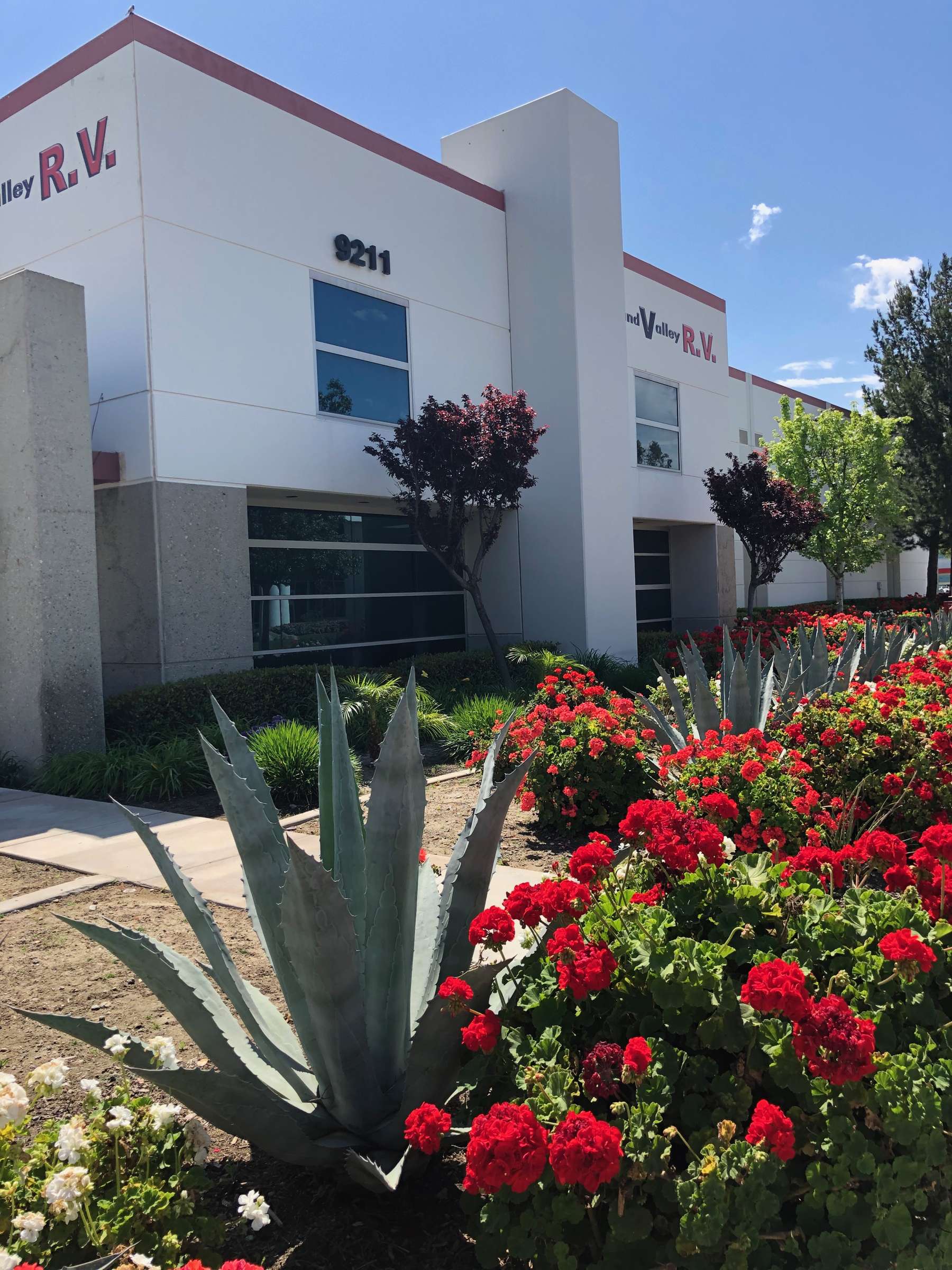
All roof work is done indoors in our 12 secure enclosed service bays at 9211 Charles Smith Ave in Rancho Cucamonga. The shop has been family-owned since 1992. Technicians are manufacturer-trained, and we are manufacturer-authorized for Forest River and Winnebago.
Estimates are by appointment. Call (909) 980-1746. If the damage is from a storm, hail, a falling tree, or a collision, we document it and work directly with your insurance carrier. We work with all major insurance carriers. Coverage varies by policy. Labor is backed by a 60-day warranty. Membrane and materials follow the manufacturer's warranty terms.
FAQ
A soft, rubber-like surface is usually EPDM. A smoother, lighter, more plastic-like membrane is often TPO. A hard, rigid shell is usually fiberglass. Coatings, prior replacements, and mixed construction can make this harder to judge from the ground. A shop inspection will confirm the type and the condition of the decking underneath.
Not automatically, and we do not treat one material as the right choice for every coach. TPO is generally more resistant to UV and heat than uncoated black EPDM, which matters in the Inland Empire, but both still depend on sound seams, terminations, and seals around vents and air conditioners. The decision on a replacement depends on the coach, the decking, and the product being installed, which we discuss at the estimate.
Many fiberglass cracks, seams, and openings can be repaired and resealed if the substrate is sound. If the roof is delaminating or the substrate is wet, the work can include structural repair as well as refinishing. We tell you which approach your roof needs after an inspection.
Yes. We work on rubber (EPDM and TPO), fiberglass, and aluminum roofs on travel trailers, fifth wheels, motorhomes, and toy haulers. During the estimate we discuss options and durability for your coach.
See our RV roof repair and replacement process.
Schedule a roof inspection or estimate.